 EN
EN
Industrial operations across manufacturing, pharmaceuticals, food processing, and electronics rely heavily on high-purity nitrogen for various applications. Understanding how a nitrogen generator operates can help businesses make informed decisions about their gas supply systems. A nitrogen generator provides an efficient, cost-effective alternative to traditional nitrogen delivery methods, offering continuous on-site production with precise purity control. This comprehensive guide explores the intricate workings of nitrogen generation technology, examining the scientific principles, operational mechanisms, and practical applications that make these systems indispensable in modern industry.
Fundamental Principles of Nitrogen Generation
Atmospheric Nitrogen Composition
The Earth's atmosphere contains approximately 78% nitrogen, 21% oxygen, and 1% other gases, making atmospheric air an abundant source for nitrogen production. A nitrogen generator exploits this natural composition by separating nitrogen molecules from other atmospheric components through various technological approaches. The separation process relies on the different physical and chemical properties of atmospheric gases, particularly the molecular size differences between nitrogen and oxygen. Understanding this fundamental principle is crucial for appreciating how nitrogen generator systems achieve high-purity nitrogen output from standard compressed air input.
The molecular structure of nitrogen (N₂) differs significantly from oxygen (O₂) in terms of size, adsorption characteristics, and permeation rates through selective materials. These differences form the basis for separation technologies employed in modern nitrogen generator designs. The kinetic diameter of nitrogen molecules measures approximately 3.64 angstroms, while oxygen molecules measure about 3.46 angstroms, creating opportunities for size-based separation methods. Additionally, nitrogen exhibits lower adsorption affinity compared to oxygen when exposed to certain materials, enabling selective retention and release processes.
Gas Separation Technologies
Modern nitrogen generator systems utilize two primary separation technologies: Pressure Swing Adsorption (PSA) and membrane separation. PSA technology employs carbon molecular sieve (CMS) materials that preferentially adsorb oxygen, water vapor, and other impurities while allowing nitrogen to pass through. The adsorption process occurs under elevated pressure, with periodic pressure reduction cycles that regenerate the adsorbent material by releasing trapped impurities. This cyclical operation ensures continuous nitrogen production while maintaining consistent purity levels.
Membrane separation technology utilizes hollow fiber membranes with selective permeation properties that allow faster-moving molecules like oxygen, water vapor, and carbon dioxide to permeate through the membrane wall more readily than nitrogen. The nitrogen generator membrane system operates on the principle of differential permeation rates, where feed air under pressure contacts the membrane surface, and selective gases permeate through to a lower-pressure permeate side. The remaining nitrogen-rich gas stream continues as the product gas, achieving desired purity levels through controlled flow rates and pressure differentials.
Pressure Swing Adsorption Process
Adsorption Cycle Operations
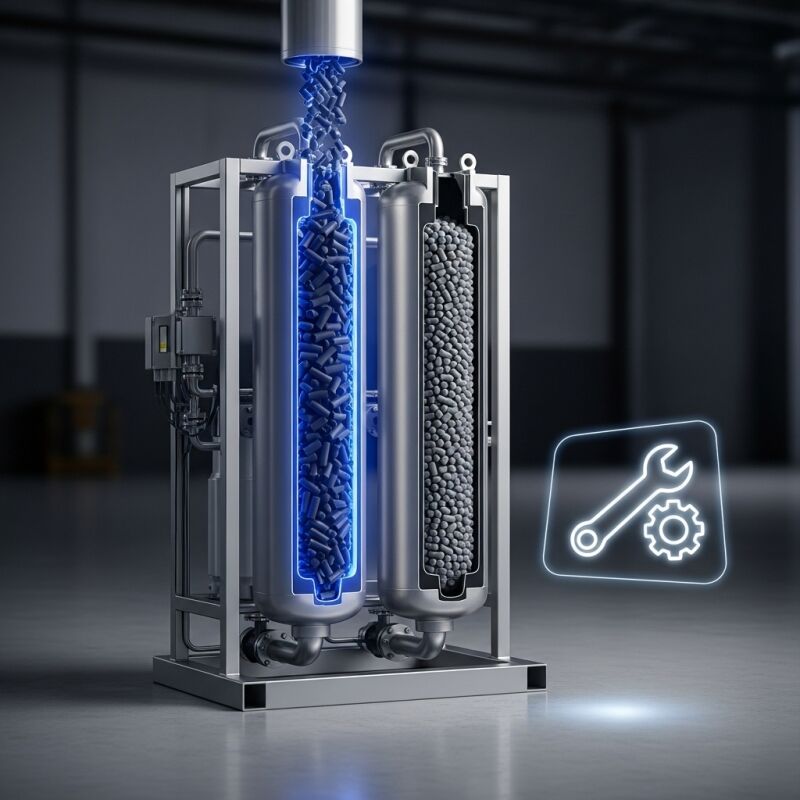
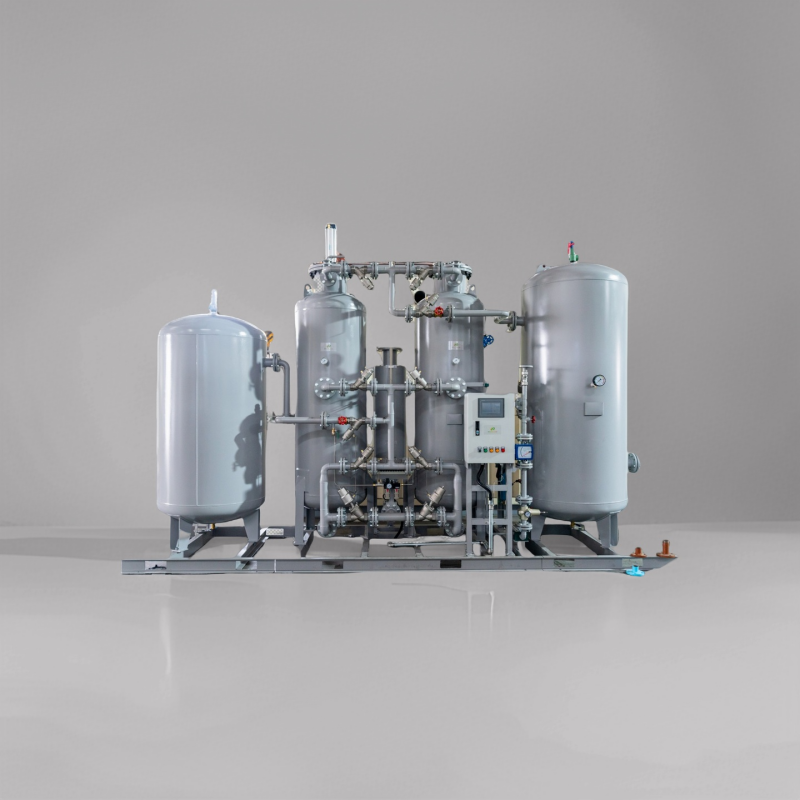
The PSA nitrogen generator operates through a carefully orchestrated sequence of adsorption and desorption cycles using twin towers filled with carbon molecular sieve material. During the adsorption phase, compressed air enters the bottom of Tower A at elevated pressure, typically 5-10 bar, forcing oxygen and other impurities to adsorb onto the CMS material while nitrogen molecules pass through relatively unhindered. The tower gradually becomes saturated with adsorbed impurities as the process continues, requiring periodic regeneration to maintain separation efficiency.
Simultaneously, Tower B undergoes regeneration through pressure reduction and purge gas flow, releasing previously adsorbed impurities to atmosphere and preparing the CMS material for the next adsorption cycle. The nitrogen generator control system monitors pressure differentials, flow rates, and timing parameters to optimize cycle duration and switching sequences. Typical cycle times range from 30 seconds to several minutes, depending on system capacity, required purity levels, and operating conditions. The alternating tower operation ensures continuous nitrogen production without interruption during regeneration phases.
Carbon Molecular Sieve Properties
Carbon molecular sieve materials represent highly engineered adsorbents specifically designed for oxygen-nitrogen separation in nitrogen generator applications. The CMS structure contains precisely controlled micropores with dimensions that allow preferential adsorption of oxygen molecules while restricting nitrogen adsorption. Manufacturing processes create uniform pore structures through carbonization of organic precursors followed by controlled activation procedures that fine-tune pore dimensions and surface properties.
The adsorption capacity and selectivity of CMS materials directly influence nitrogen generator performance, determining achievable purity levels, production rates, and energy consumption. High-quality CMS exhibits excellent adsorption kinetics for oxygen removal, minimal nitrogen adsorption, and long-term stability under cycling conditions. Proper CMS selection and handling procedures are critical for maintaining optimal nitrogen generator performance throughout the system's operational lifetime. Regular monitoring of CMS condition helps identify potential degradation and optimization opportunities.
Membrane Separation Technology
Hollow Fiber Membrane Construction
Membrane-based nitrogen generator systems utilize thousands of hollow fiber membranes bundled within pressure vessels to create large separation surface areas in compact configurations. Each hollow fiber consists of polymeric materials with selective permeation properties that facilitate differential gas transport rates. The membrane wall thickness, typically measured in microns, influences separation efficiency and production capacity. Compressed air flows through the hollow interior (bore side) while permeated gases escape through the membrane wall to the shell side at lower pressure.
The membrane material composition determines selectivity characteristics, with common polymers including polyimide, polysulfone, and polyetherimide formulations. Manufacturing processes control membrane morphology, creating dense selective layers that govern permeation rates and separation factors. The nitrogen generator membrane bundle design incorporates thousands of individual fibers potted at both ends with specialized sealants that prevent bypass flow and maintain separation integrity.
Permeation Rate Mechanisms
Gas permeation through selective membranes occurs through a solution-diffusion mechanism where gas molecules dissolve into the membrane material, diffuse across the membrane thickness, and desorb on the downstream side. Permeation rates depend on gas solubility coefficients, diffusion coefficients, and membrane thickness according to established transport equations. Oxygen exhibits significantly higher permeation rates compared to nitrogen, creating the separation driving force that enables nitrogen enrichment.
The membrane nitrogen generator achieves separation through controlled residence time and pressure differential management. Higher feed pressures increase permeation driving forces, while longer residence times allow greater separation approach to equilibrium conditions. Temperature effects influence both solubility and diffusion parameters, requiring consideration of operating temperature variations. Membrane aging and fouling can gradually reduce permeation rates and selectivity, necessitating periodic maintenance and eventual membrane replacement to maintain system performance.
System Components and Integration
Air Compression and Treatment
Every nitrogen generator system begins with compressed air preparation that removes contaminants and conditions the feed stream for optimal separation performance. Air compressors provide the necessary pressure elevation, typically 5-12 bar, depending on system design requirements. Compressed air contains oil vapors, water vapor, particulates, and trace contaminants that can adversely affect separation efficiency and component longevity if not properly removed.
The air treatment train typically includes aftercoolers for temperature reduction, moisture separators for liquid water removal, particulate filters for solid contaminant removal, and adsorption dryers for trace moisture elimination. Oil removal requires specialized coalescing filters and activated carbon adsorbers designed for hydrocarbon vapor elimination. Proper air treatment extends nitrogen generator component life, maintains separation efficiency, and ensures product gas quality consistency. Regular maintenance of air treatment components prevents downstream contamination and performance degradation.
Control and Monitoring Systems
Modern nitrogen generator installations incorporate sophisticated control systems that monitor operating parameters, optimize performance, and provide automated operation with minimal operator intervention. Programmable logic controllers (PLCs) manage valve sequencing, timing cycles, pressure regulation, and safety interlocks. Human-machine interfaces (HMIs) display real-time operating data, historical trends, alarm conditions, and maintenance schedules.
Critical monitoring parameters include feed air pressure, nitrogen purity levels, production flow rates, system temperatures, and differential pressures across key components. Oxygen analyzers provide continuous purity monitoring with alarm functions for out-of-specification conditions. Flow measurement devices track production rates and consumption patterns for optimization purposes. Pressure transmitters monitor system pressures throughout the nitrogen generator, enabling performance evaluation and predictive maintenance planning.
Performance Optimization Strategies
Operating Parameter Control
Achieving optimal nitrogen generator performance requires careful attention to operating parameters that influence separation efficiency, energy consumption, and product quality. Feed air pressure represents a critical variable affecting both PSA and membrane system performance. Higher pressures generally improve separation driving forces but increase energy consumption and component stress. The optimal pressure balances production requirements with operational costs.
Cycle timing in PSA nitrogen generator systems significantly impacts performance, with shorter cycles providing higher purity at reduced recovery rates, while longer cycles increase recovery with potential purity penalties. Temperature control affects both adsorption equilibrium in PSA systems and permeation rates in membrane systems. Maintaining stable operating temperatures through proper heat management improves consistency and extends component life.
Maintenance and Troubleshooting
Preventive maintenance programs ensure reliable nitrogen generator operation and extend system lifetime while minimizing unplanned downtime. Regular air treatment system maintenance includes filter element replacement, dryer regenerant replacement, and moisture separator draining. PSA systems require periodic CMS inspection and replacement, valve maintenance, and pressure vessel inspection. Membrane systems need membrane bundle replacement and pressure vessel cleaning.
Common troubleshooting scenarios include purity degradation, reduced production capacity, increased energy consumption, and system cycling irregularities. Systematic diagnostic procedures identify root causes through parameter monitoring, component testing, and performance analysis. Maintaining detailed operating logs facilitates trend analysis and predictive maintenance scheduling. Regular performance testing validates system capability and identifies optimization opportunities.
Applications and Selection Criteria
Industrial Application Requirements
Different industrial applications impose varying requirements on nitrogen generator systems regarding purity levels, production capacity, pressure requirements, and reliability standards. Electronics manufacturing typically requires ultra-high purity nitrogen (99.999% or higher) for semiconductor processing and component assembly. Food packaging applications may accept lower purity levels (95-99%) for modified atmosphere packaging and product preservation.
Pharmaceutical applications often demand intermediate purity levels (99.5-99.9%) with strict quality documentation and validation requirements. Oil and gas operations utilize nitrogen generator systems for pipeline purging, tank blanketing, and enhanced oil recovery applications. Each application presents unique challenges that influence system selection criteria, including environmental conditions, space constraints, and integration requirements.
Economic Considerations
Economic analysis comparing nitrogen generator systems with alternative supply methods considers capital costs, operating expenses, and lifecycle costs. On-site nitrogen generation eliminates delivery costs, reduces inventory requirements, and provides supply security advantages. Initial capital investment varies significantly between PSA and membrane technologies, with PSA systems typically requiring higher upfront costs but offering better economics for higher purity requirements.
Operating costs include electrical energy consumption, maintenance expenses, and replacement component costs. Energy consumption represents the largest operating cost component, making efficiency optimization crucial for economic success. Payback period analysis helps justify nitrogen generator investments by quantifying savings compared to delivered nitrogen costs. Total cost of ownership calculations should include installation costs, training expenses, and end-of-life disposal considerations.
FAQ
What is the typical purity range achievable with different nitrogen generator technologies?
PSA nitrogen generator systems can achieve purity levels ranging from 95% to 99.999%, with most industrial applications utilizing 99.5-99.9% purity nitrogen. Membrane systems typically produce nitrogen in the 95-99.5% purity range, making them suitable for applications with moderate purity requirements. The achievable purity depends on system design, operating conditions, and specific technology implementation.
How does nitrogen generator capacity affect system selection and design?
Nitrogen generator capacity requirements directly influence technology selection, system sizing, and economic considerations. Small-scale applications (under 50 Nm³/hr) often favor membrane technology due to simplicity and lower capital costs. Medium to large-scale applications (over 100 Nm³/hr) typically utilize PSA technology for better efficiency and economics. Proper capacity sizing considers peak demand, future expansion, and redundancy requirements.
What maintenance requirements should be expected with nitrogen generator systems?
Nitrogen generator maintenance requirements include regular air treatment system servicing, periodic adsorbent or membrane replacement, and routine system inspections. PSA systems require carbon molecular sieve replacement every 5-10 years and valve maintenance every 2-3 years. Membrane systems need membrane bundle replacement every 3-7 years depending on operating conditions. Daily monitoring and monthly preventive maintenance tasks ensure optimal performance.
How do environmental conditions affect nitrogen generator performance?
Environmental conditions significantly impact nitrogen generator performance through temperature effects on separation efficiency and humidity effects on air treatment requirements. High ambient temperatures reduce separation efficiency and increase cooling requirements. High humidity conditions increase moisture loading on air treatment systems and may affect separation performance. Proper environmental control and system design accommodate local climate conditions for optimal operation.
Table of Contents
- Fundamental Principles of Nitrogen Generation
- Pressure Swing Adsorption Process
- Membrane Separation Technology
- System Components and Integration
- Performance Optimization Strategies
- Applications and Selection Criteria
-
FAQ
- What is the typical purity range achievable with different nitrogen generator technologies?
- How does nitrogen generator capacity affect system selection and design?
- What maintenance requirements should be expected with nitrogen generator systems?
- How do environmental conditions affect nitrogen generator performance?