 EN
EN

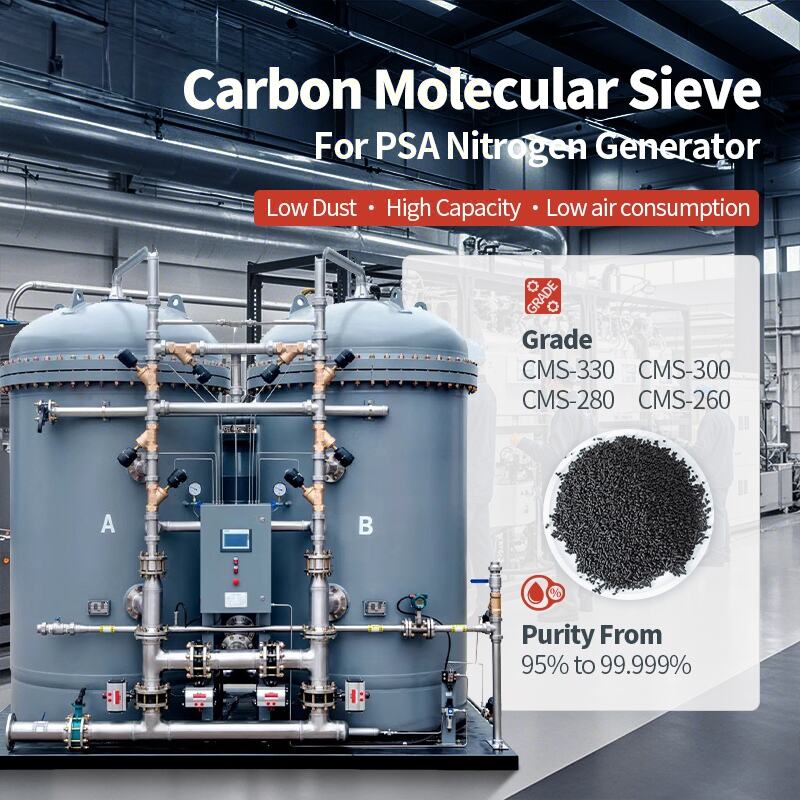
The Carbon Molecular Sieve (CMS) serves as the heart of every Pressure Swing Adsorption (PSA) nitrogen generator, separating nitrogen from oxygen through selective adsorption. Over time, even the most robust CMS material degrades due to exposure to contaminants, moisture, mechanical stress, and thermal cycling. Recognizing when your CMS in PSA generator has reached the end of its effective lifespan—and understanding how to execute a complete replacement—determines whether your system continues delivering high-purity nitrogen or begins wasting energy while producing substandard output. This article provides actionable guidance on timing indicators, replacement procedures, and post-installation validation to ensure operational continuity and cost efficiency.
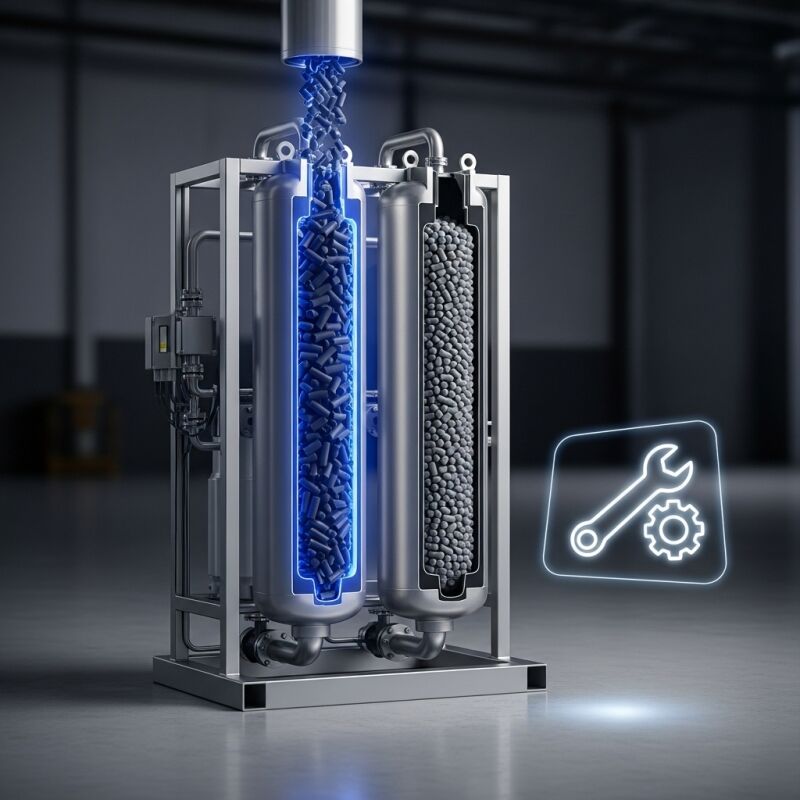
Many facility managers delay CMS replacement until catastrophic purity failures disrupt production, incurring emergency costs and downtime. A proactive approach grounded in performance monitoring, scheduled assessment, and systematic replacement planning minimizes these risks. By understanding the behavioral patterns that signal CMS deterioration and following structured replacement protocols, you protect both capital investment and production schedules. The following sections detail the key performance indicators that trigger replacement decisions, the step-by-step process for safe and effective CMS renewal, and the validation tests that confirm system restoration to optimal performance levels.
Recognizing When CMS Replacement Becomes Necessary
Performance Degradation Indicators
The first sign of aging CMS in PSA generator systems typically manifests as gradual nitrogen purity decline. When your online analyzer shows consistent readings below specification—even after pressure adjustments and cycle optimization—the molecular sieve has likely lost selective adsorption capacity. This degradation occurs as micro-pores become blocked by hydrocarbons, oil aerosols, or particulate matter that bypasses upstream filtration. Even trace contaminants accumulate over thousands of cycles, progressively reducing the effective surface area available for oxygen adsorption. Once purity drops below your process requirements, no amount of system tuning can compensate for exhausted CMS material.
Increased energy consumption per unit of nitrogen produced provides another critical indicator. As the CMS in PSA generator loses efficiency, the compressor must work harder and longer to achieve the same nitrogen flow rate and purity level. You may notice higher amp draw on the compressor motor, extended cycle times, or elevated discharge temperatures. These symptoms reflect reduced adsorption kinetics—the CMS no longer captures oxygen molecules as quickly or completely as when fresh. Tracking specific power consumption over time reveals this trend clearly, with deteriorating CMS often causing a fifteen to thirty percent increase in energy use before complete failure becomes evident.
Operational Symptom Patterns
Unusual pressure swing behavior during regeneration cycles often signals CMS deterioration that warrants replacement consideration. When the CMS in PSA generator begins failing, you may observe incomplete pressure equalization between towers, asymmetric blowdown characteristics, or extended purge requirements to achieve acceptable regeneration. These patterns indicate that the molecular sieve can no longer release adsorbed oxygen efficiently during depressurization, causing carryover contamination into subsequent production cycles. Operators sometimes compensate by extending purge times or increasing purge flow, but these adjustments only mask the underlying problem while consuming additional nitrogen and energy.
Physical indicators also provide replacement timing clues. Excessive CMS dust in discharge nitrogen, visible through sample port inspection or filter discoloration, suggests mechanical breakdown of the molecular sieve particles. This attrition results from thermal stress during rapid pressure cycling, moisture-induced swelling and contraction, or simple age-related friability. While some fines generation is normal, heavy dusting indicates advanced degradation. Similarly, if system vibration increases or you hear unusual settling sounds from the adsorber vessels, the CMS bed may have compacted unevenly or developed voids that create flow channeling and bypass streams.
Service Life Expectations and Documentation
Most manufacturers specify a design service life for CMS in PSA generator systems ranging from five to ten years under ideal operating conditions. However, actual lifespan varies significantly based on inlet air quality, operating pressure, cycle frequency, and maintenance practices. Systems processing contaminated air or operating at the upper temperature limits may require CMS replacement after just three to four years. Conversely, installations with excellent pre-treatment, stable operating conditions, and regular maintenance sometimes achieve twelve years or more from a single CMS charge. Keeping detailed performance logs—including purity trends, energy consumption, and maintenance interventions—enables data-driven replacement timing rather than relying solely on calendar age.
Regulatory or quality system requirements may also dictate replacement schedules. Industries with stringent purity specifications—such as pharmaceuticals, food processing, or electronics manufacturing—often mandate CMS replacement at fixed intervals regardless of measured performance. These preventive replacement programs eliminate the risk of gradual purity degradation going undetected and compromising product quality. Even when performance appears adequate, scheduled replacement ensures consistent nitrogen quality and provides predictable maintenance planning. Integrating CMS replacement into your preventive maintenance calendar, documented through your quality management system, demonstrates regulatory compliance and supports audit requirements.
Preparing for Safe and Effective CMS Replacement
System Shutdown and Safety Protocols
Before beginning any work on the CMS in PSA generator, complete system depressurization and lockout-tagout procedures according to your facility safety standards. Vent both adsorber vessels to atmospheric pressure through the designated vent system, ensuring all stored energy is safely released. Nitrogen, while inert, displaces oxygen and creates asphyxiation hazards in confined spaces. Establish continuous atmospheric monitoring if work requires entering vessels, and ensure adequate ventilation throughout the replacement process. Isolating the PSA system electrically and mechanically prevents accidental energization during maintenance, protecting personnel from unexpected pressure cycling or valve actuation.
Environmental considerations during CMS removal deserve careful attention. While the molecular sieve material itself is generally non-hazardous, it may contain adsorbed hydrocarbons, moisture, or other contaminants from the process air stream. Review material safety data sheets for both the existing and replacement CMS in PSA generator systems, and implement appropriate handling and disposal procedures. Some jurisdictions classify used molecular sieves as industrial waste requiring special disposal, while others allow standard landfill disposal. Contain CMS dust during removal using appropriate dust control measures, as fine particles can create respiratory irritation even though the base material is typically non-toxic.
Vessel Inspection and Preparation
With the system safely depressurized and isolated, remove vessel heads or access covers to expose the CMS bed. This step provides an opportunity to inspect internal components rarely visible during normal operation. Examine support grids, distributor plates, and internal piping for corrosion, erosion, or mechanical damage. Check the integrity of inlet and outlet screens that prevent CMS migration into downstream piping. Any corrosion or structural degradation should be addressed before installing fresh CMS in PSA generator vessels, as compromised internals can contaminate new molecular sieve or create flow distribution problems that reduce performance.
Thoroughly clean the interior surfaces of each adsorber vessel before introducing new CMS material. Remove all traces of old molecular sieve, paying particular attention to corners, dead spaces, and areas around nozzle penetrations. Even small amounts of degraded CMS mixed with fresh material can seed performance problems or accelerate new CMS degradation. Use vacuum equipment rated for fine particulate collection rather than compressed air blowdown, which can embed dust into vessel insulation or piping. Inspect vessel insulation if present, repairing any damage that could allow heat loss and reduce regeneration efficiency. A clean, well-prepared vessel maximizes the performance and service life of the replacement CMS.
Selecting and Sourcing Replacement CMS
Choosing the correct replacement CMS in PSA generator systems requires matching both the physical properties and performance characteristics of the original specification. Molecular sieve manufacturers produce various CMS grades optimized for different operating pressures, cycle times, and purity requirements. Using an incompatible grade—even if physically similar—can result in inadequate nitrogen purity, reduced capacity, or shortened service life. Consult your PSA system documentation or contact the original equipment manufacturer to verify the specified CMS type, particle size distribution, and bulk density requirements. If upgrading to an improved CMS formulation, ensure compatibility with your system design and operating parameters.
Source replacement CMS from reputable suppliers who provide full technical documentation and quality certifications. Counterfeit or substandard molecular sieve materials occasionally enter industrial markets, offering attractive pricing but delivering poor performance and shortened service life. Legitimate CMS suppliers provide certificates of analysis confirming crush strength, particle size distribution, adsorption capacity, and other critical specifications. They also offer application support to help select the optimal product for your specific operating conditions. While premium CMS in PSA generator applications costs more initially, superior performance and extended service life typically deliver lower total cost of ownership compared to economy-grade alternatives.
Executing the CMS Replacement Process
Proper Loading Techniques
Loading new CMS into adsorber vessels demands careful technique to achieve uniform bed density and prevent particle damage. Pour the molecular sieve gradually in controlled increments rather than dumping entire containers, which can cause particle breakage and create density variations. As you add CMS in PSA generator vessels, periodically pause to allow material to settle naturally. Some installers use gentle vibration on the vessel exterior to promote settling, but excessive vibration can cause segregation by particle size, creating flow distribution problems. Maintain steady, controlled loading rates to build a uniform bed from bottom to top.
Monitor bed height carefully throughout the loading process, comparing actual fill level against specifications. CMS bulk density variations between production lots or suppliers can affect the total quantity required to achieve the specified bed height. Under-filling leaves excessive void space that allows gas bypass and reduces effective contact time, while over-filling can cause mechanical stress on support grids or restrict bed expansion during pressure cycling. Most PSA systems specify bed height tolerance of just a few centimeters. Use permanent reference marks inside the vessel or external measuring devices to verify proper fill level before sealing the vessel. Document the actual CMS quantity loaded for future reference when planning subsequent replacements.
System Reassembly and Pressure Testing
After completing CMS loading in both adsorber towers, carefully reinstall vessel heads and access covers, ensuring all gaskets are properly positioned and sealing surfaces are clean. Follow manufacturer torque specifications precisely when tightening bolts, using calibrated torque wrenches and recommended tightening sequences to achieve uniform gasket compression. Over-torquing can damage gaskets or vessel flanges, while under-torquing risks operational leaks that compromise system performance. Replace gaskets according to manufacturer recommendations—many PSA systems require new gaskets whenever vessels are opened, as re-using compressed gaskets may not provide reliable sealing under operating pressures.
Conduct thorough pressure testing before returning the system to service with the new CMS in PSA generator vessels. Begin with a low-pressure leak test using nitrogen or clean, dry air, pressurizing the system gradually while monitoring all flanges, penetrations, and piping connections for leaks. Use approved leak detection methods such as soap solution, ultrasonic detectors, or electronic leak testers rather than relying on audible detection alone. Once low-pressure integrity is confirmed, proceed to full design pressure testing, holding pressure for the duration specified in your maintenance procedures or applicable pressure vessel codes. Document all test results, including test pressure, hold duration, and pressure decay measurements, maintaining these records as part of your equipment history file.
Initial System Activation and Conditioning
Fresh CMS requires proper activation and conditioning before achieving full performance capacity. New molecular sieve typically contains residual moisture from manufacturing and packaging that must be removed through controlled drying cycles. Begin system startup at reduced pressure—typically fifty to seventy percent of normal operating pressure—and run extended regeneration cycles for the first several hours of operation. This gentle conditioning gradually drives off moisture while allowing the CMS in PSA generator beds to stabilize thermally without the stress of full-pressure cycling. Monitor discharge temperatures and humidity levels during this conditioning period, looking for progressive reduction as the molecular sieve dries.
Gradually increase operating pressure and reduce cycle times over the first twenty-four to forty-eight hours of operation, approaching normal parameters incrementally. This staged approach allows the CMS bed to compact naturally under operating forces while minimizing particle attrition from sudden pressure shocks. During initial operation, purity may not reach full specification immediately—expect a break-in period during which nitrogen purity improves as the molecular sieve fully activates and bed conditions stabilize. Continue monitoring performance closely throughout this commissioning phase, adjusting cycle parameters as needed to optimize separation efficiency while the new CMS in PSA generator systems reaches equilibrium operating conditions.
Post-Replacement Validation and Optimization
Performance Verification Testing
Once the conditioning period is complete and the system operates at normal parameters, conduct comprehensive performance verification to confirm the CMS replacement achieved intended results. Measure nitrogen purity at multiple points in the production cycle using calibrated analyzers, ensuring output meets or exceeds specification throughout the pressure swing cycle. Compare current purity readings against historical data from when the system was new or freshly serviced, establishing that the new CMS in PSA generator has restored design performance. Document these baseline measurements carefully, as they provide the reference point for monitoring future performance degradation and planning the next replacement cycle.
Verify system capacity and specific energy consumption to ensure overall performance restoration. Measure nitrogen flow rate at specified purity and operating pressure, confirming the system delivers design capacity. Calculate energy consumption per unit of nitrogen produced, comparing against manufacturer specifications and historical performance data. Properly executed CMS replacement should return specific power consumption to near-original levels, eliminating the efficiency losses that accumulated as the old molecular sieve degraded. If performance falls short of expectations, investigate potential causes such as inadequate CMS quantity, contaminated inlet air, valve malfunction, or bed loading irregularities requiring correction.
System Optimization and Fine-Tuning
With fresh CMS installed and basic performance verified, optimize cycle parameters to maximize efficiency and service life of the new molecular sieve. Review pressure swing timing, purge flow rates, and equalization sequences, adjusting as needed to match the adsorption characteristics of the specific CMS grade installed. Different molecular sieve formulations exhibit varying adsorption kinetics and regeneration requirements, so cycle parameters optimized for the old CMS in PSA generator may not be ideal for replacement material, especially if you upgraded to an improved formulation. Work systematically through parameter adjustments, measuring the impact on purity, capacity, and energy consumption to identify the optimal operating point.
Establish enhanced monitoring protocols during the initial months following CMS replacement to detect any developing issues before they compromise performance. Track purity trends, energy consumption, and cycle behavior more frequently than during routine operation, looking for any unusual patterns that might indicate installation problems or premature degradation. This intensive monitoring period also helps refine your maintenance database, establishing reliable performance baselines and degradation rates that improve future replacement timing decisions. Regular data review during this period enables early intervention if problems develop, protecting your investment in the new CMS and ensuring maximum return on the replacement effort and expense.
Documentation and Maintenance Planning
Complete documentation of the CMS replacement project creates valuable records for regulatory compliance, maintenance planning, and future service work. Record all relevant details including replacement date, CMS grade and supplier, quantity loaded in each vessel, pressure test results, and initial performance measurements. Photograph the installation at key stages—empty vessels, loaded beds, completed reassembly—providing visual reference for future maintenance personnel. Update your equipment history file and computerized maintenance management system with this information, establishing a clear service record that tracks CMS in PSA generator life cycle patterns over multiple replacement cycles.
Use the knowledge gained during this replacement cycle to refine future maintenance strategies. Analyze the condition and service life of the removed CMS to assess whether replacement timing was optimal or could be adjusted for future cycles. If the old molecular sieve showed significant remaining capacity, you might safely extend replacement intervals. Conversely, if severe degradation occurred earlier than expected, investigate operating conditions or pre-treatment adequacy to identify improvement opportunities. This continuous improvement approach maximizes CMS service life, optimizes replacement timing, and reduces total cost of ownership for your nitrogen generation system while maintaining reliable production support.
FAQ
How long does CMS typically last in a PSA nitrogen generator?
Under optimal operating conditions with excellent air pre-treatment and proper maintenance, CMS in PSA generator systems typically lasts five to ten years. However, actual service life varies significantly based on inlet air quality, operating pressure and temperature, cycle frequency, and maintenance practices. Systems processing contaminated air or operating near maximum design limits may require replacement after just three to four years, while installations with superior pre-treatment and stable conditions sometimes achieve twelve years or more. Regular performance monitoring provides more reliable replacement timing indicators than calendar age alone.
Can I replace CMS in just one adsorber tower or must both be done simultaneously?
For optimal performance and system balance, replace CMS in both adsorber towers simultaneously even if degradation appears worse in one vessel. Mismatched molecular sieve conditions between towers create asymmetric adsorption characteristics that complicate cycle optimization and reduce overall system efficiency. Fresh CMS in one tower combined with degraded material in the other leads to uneven loading, pressure imbalances, and suboptimal nitrogen purity. While replacing a single tower may seem cost-effective, the operational compromises and shortened service life of the new CMS typically make simultaneous replacement of both towers the more economical long-term approach.
What happens if I continue operating with degraded CMS instead of replacing it?
Continuing operation with degraded CMS in PSA generator systems leads to progressive performance deterioration, increased operating costs, and eventual system failure. As the molecular sieve loses capacity, nitrogen purity gradually declines, potentially compromising product quality in your downstream processes. Energy consumption increases significantly as the compressor works harder to compensate for reduced adsorption efficiency. Eventually, the system becomes unable to meet purity specifications regardless of pressure or cycle adjustments. Delayed replacement also risks catastrophic production interruptions, emergency service costs, and potential damage to downstream equipment from off-spec nitrogen, making proactive replacement far more cost-effective than reactive failure management.
Does replacement CMS need special storage or handling before installation?
Fresh CMS requires careful storage in sealed, moisture-proof containers until installation to preserve adsorption capacity. Exposure to atmospheric humidity causes the molecular sieve to adsorb water, reducing the available capacity for oxygen removal during operation and extending the conditioning period required after installation. Store replacement CMS in a climate-controlled environment away from volatile organic compounds, solvents, or other contaminants that might be adsorbed. Once containers are opened for installation, work efficiently to minimize exposure time, and reseal any partially used containers immediately. Proper handling and storage protect your investment in replacement CMS and ensure optimal performance from installation through the full service life cycle.